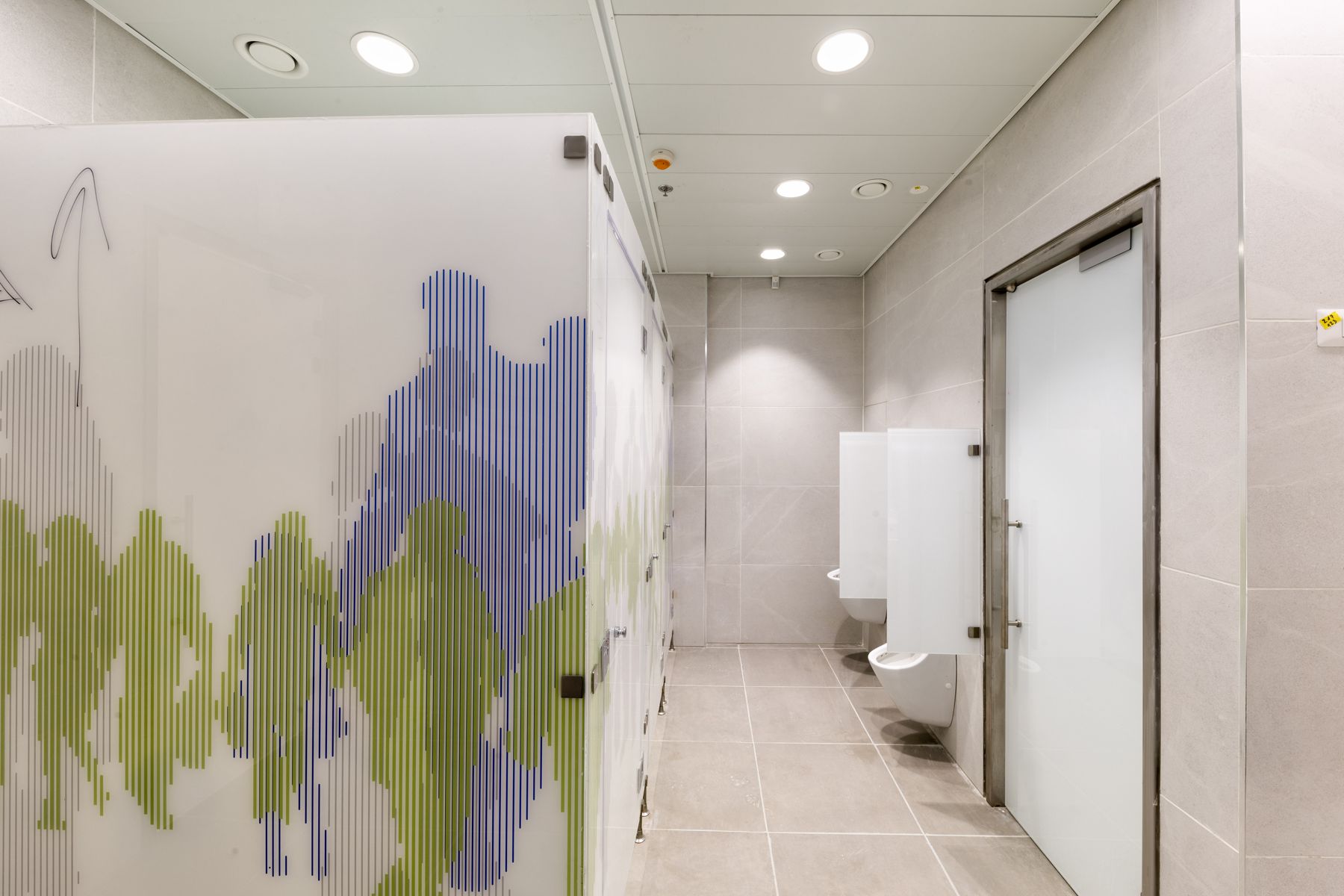
 Our project · International
Printed & Decorative Architectural Glass in Miami
Digitally printed, colored and laminated decorative glass for lobbies, restrooms and feature walls in Miami. Durable, hygienic and made to size.
- Ceramic digital or laminated
- Durability
- Fused into the glass
- Glass
- Tempered or laminated
- Use
- Walls, partitions, doors
About printed & decorative glass
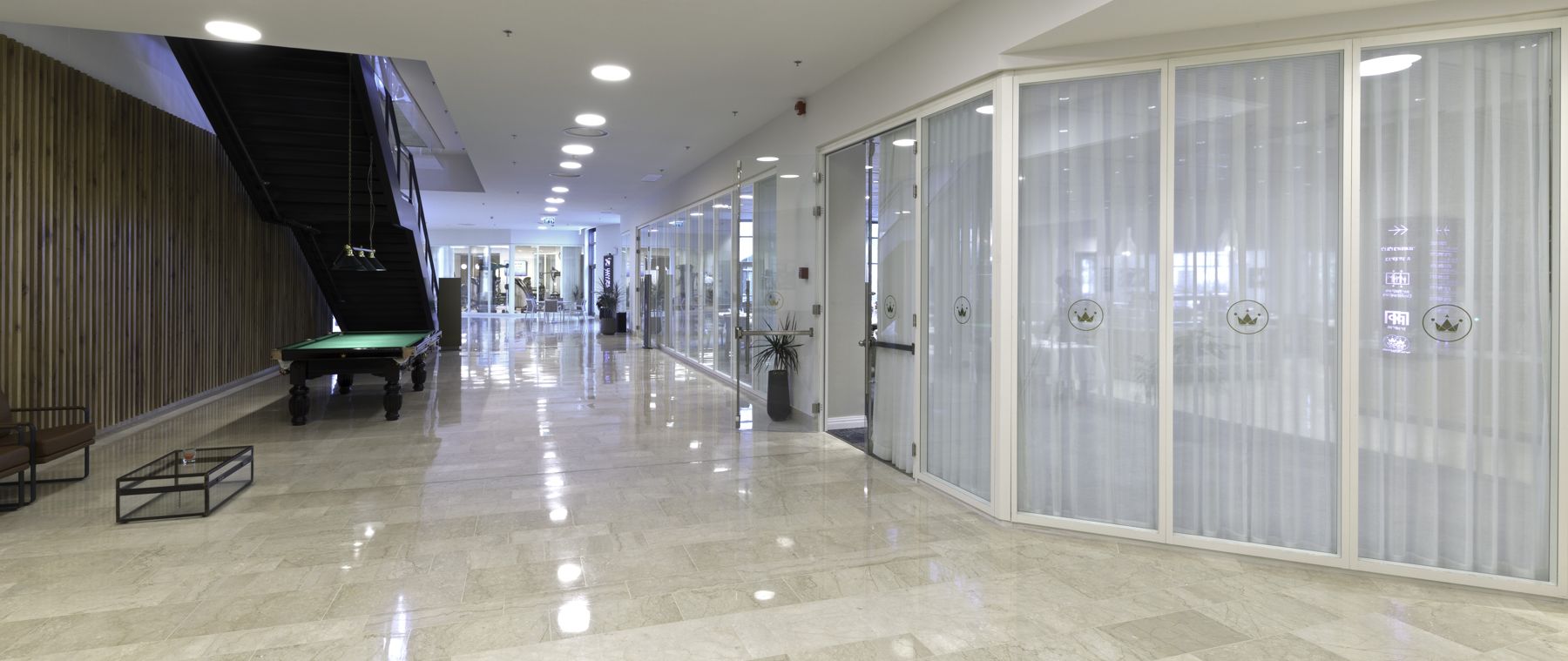
Printed glass turns a wall, partition or door into a design element. Images, patterns, gradients and brand graphics are printed with ceramic inks fused to the glass, or laminated inside it, so they will not scratch or peel.
It is durable, hygienic and easy to clean, which makes it ideal for restrooms, corridors, lobbies and healthcare spaces.
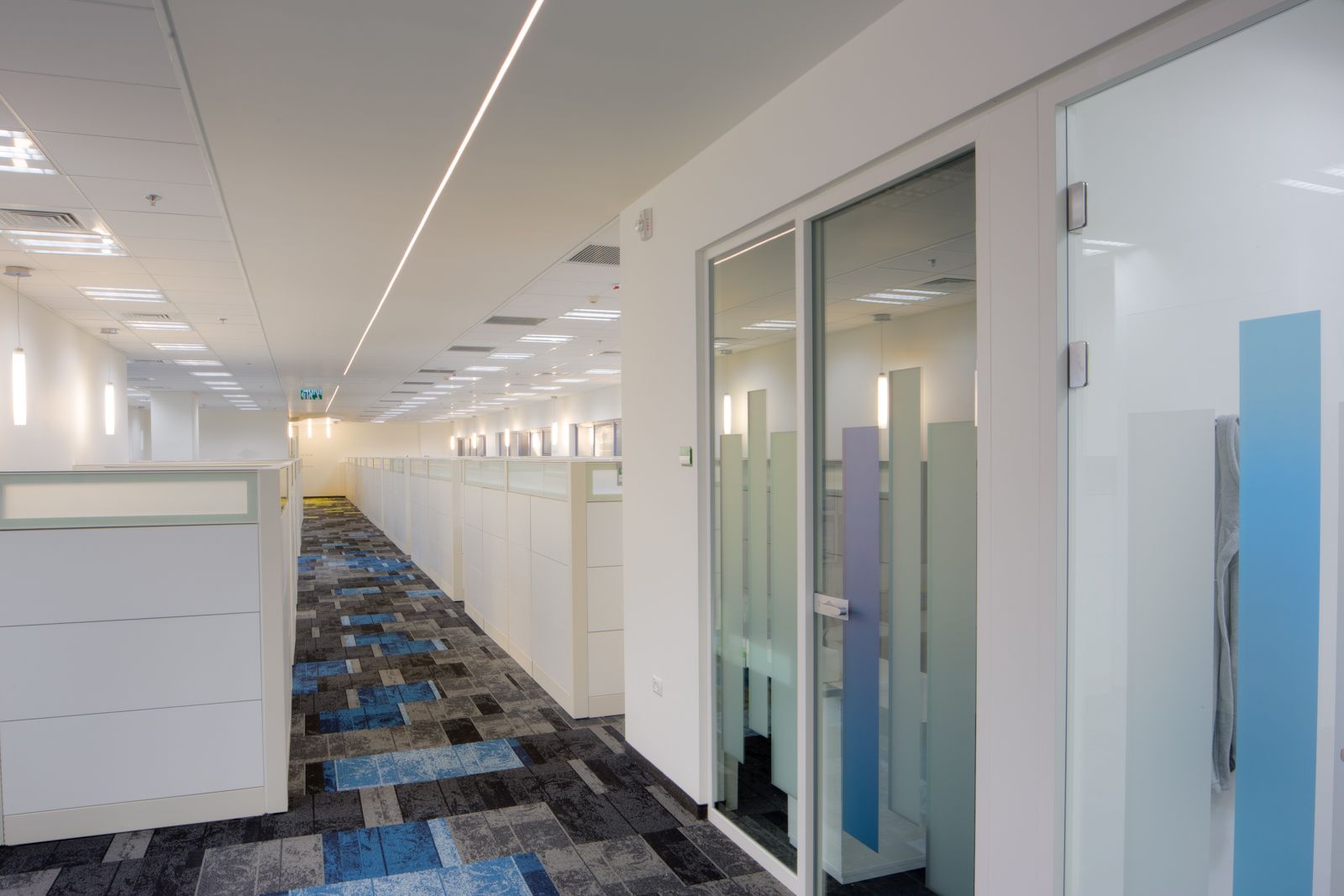 Our project · International
Anatomy of printed & decorative glass
- Digital ceramic printingCeramic inks printed on the glass and fused during tempering, so the image becomes part of the surface.
- Printed interlayersImages printed on an interlayer and sealed inside laminated glass.
- Colored interlayersTranslucent or opaque colored interlayers for solid colors and gradients.
- Proofs & samplesDigital proofs and physical samples approved before production.
- FixingChannels, clips or structural silicone, chosen by the application.
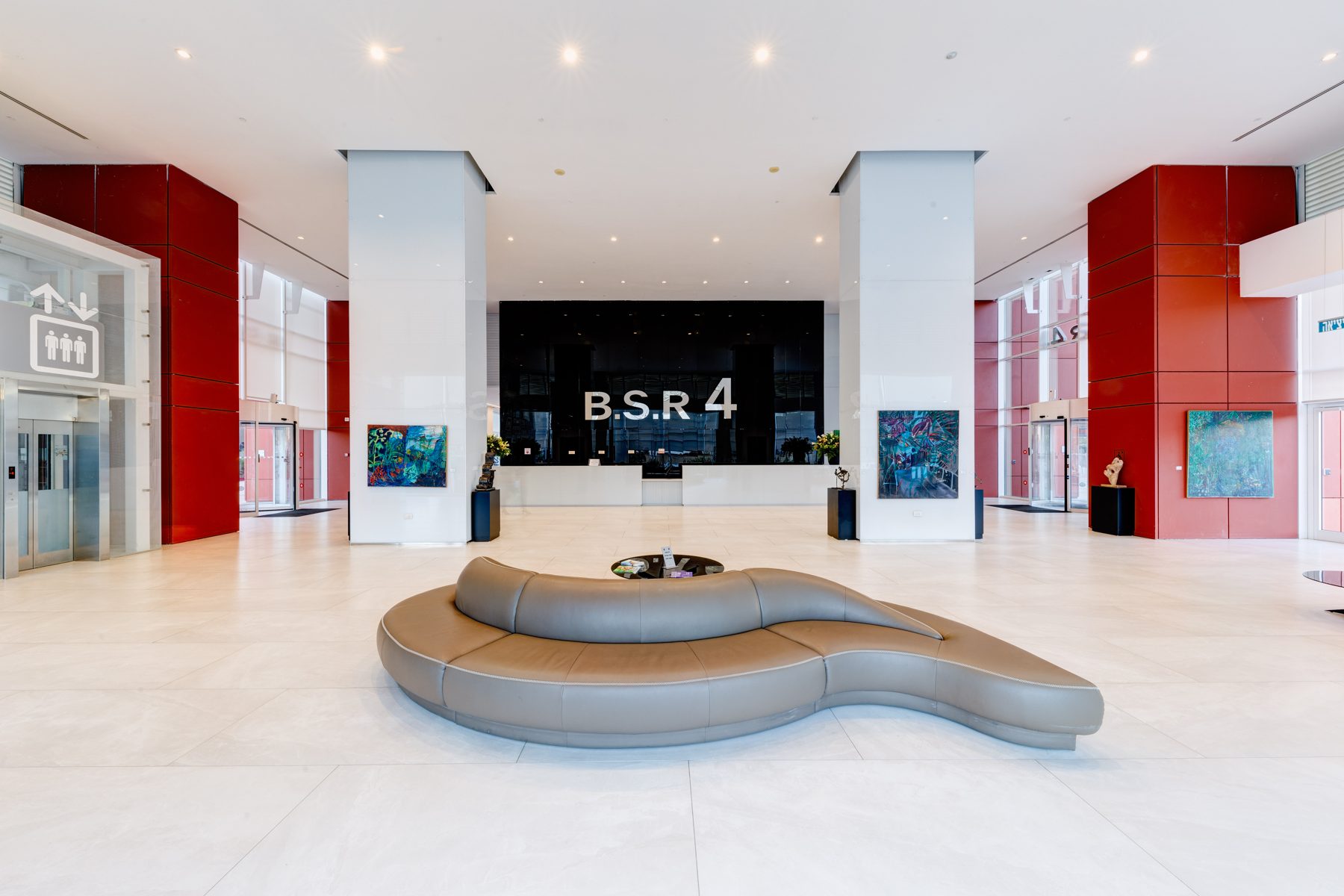
Glass that is measured, made to size and installed to a commercial standard.
Performance standards
Architectural glass is chosen by safety, strength and clarity. These are the standards and glass types behind our doors, walls, showers and mirrors.
CPSC 16 CFR 1201 / ANSI Z97.1
Safety glazing standards for glass in doors, showers, sidelights and other hazardous locations.
ASTM C1048 · Heat-treated glass
Fully tempered glass is about four times stronger than annealed glass and breaks into small, blunt pieces.
ASTM C1172 · Laminated glass
Two or more plies bonded by an interlayer that holds the glass in place if it breaks; used where retention matters.
ASTM C1503 · Mirrors
Quality standard for silvered mirror glass, with edge sealing and compatible adhesives for long life.
ANSI/BHMA A156.10 / A156.19
Standards for power-operated sliding doors and low-energy automatic swing doors.
Accessibility (ADA / FBC)
Clear opening width, low thresholds and limited opening force on accessible doors.
Code references are summarized for orientation. Final requirements are confirmed by the engineer of record and the building department for each project.
Design considerations
What our engineering team reviews with the design team before the drawings are final.
- Resolution and scaleArtwork is prepared at the right resolution for the panel size and viewing distance.
- Opacity by zonePrint density can vary across the panel to combine privacy and light.
- Color matchingCeramic colors differ from paper or screen; samples are approved in the actual light.
- Bird-friendly patternsOn exterior glass, frit patterns can also reduce bird collisions.
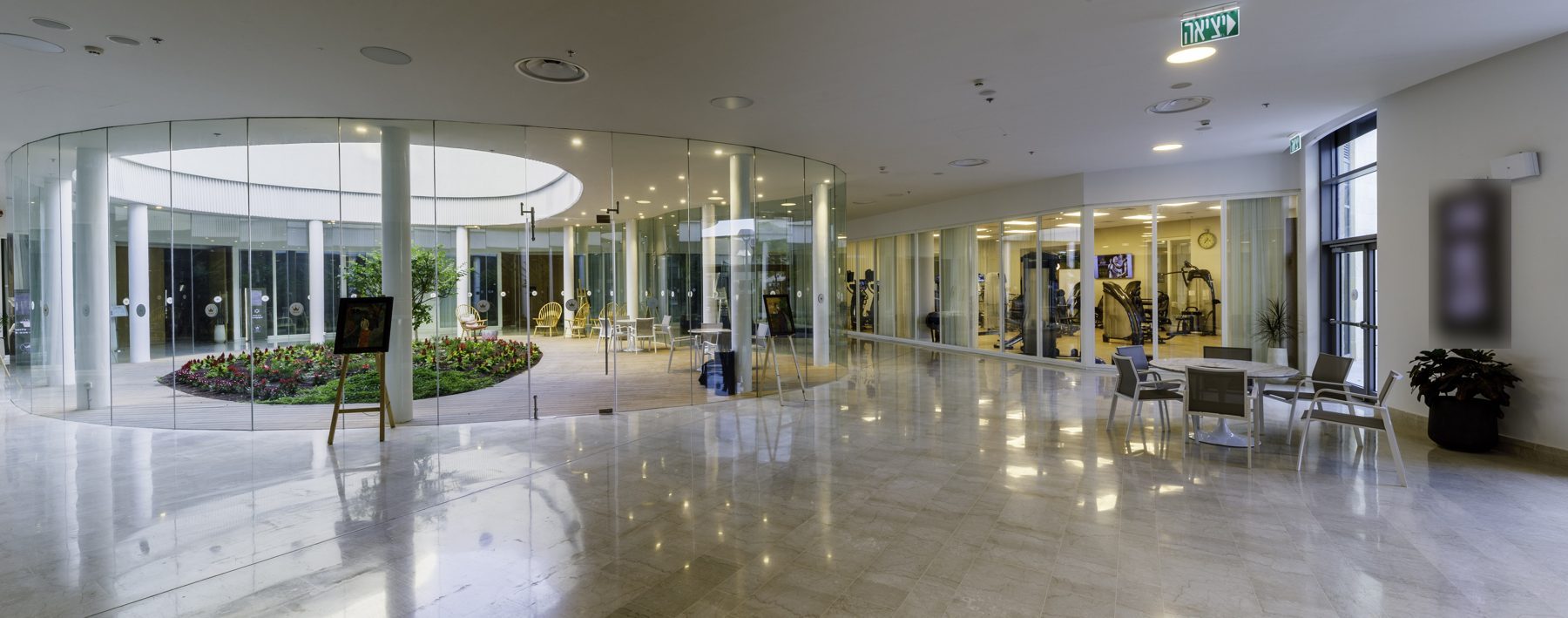 Our project · International
Glass types compared
A quick reference our engineers use with architects and owners when choosing the right system.
| Annealed | Heat-strengthened | Fully tempered | Laminated | Low-iron | |
|---|---|---|---|---|---|
| Strength | Base | About 2x annealed | About 4x annealed | Depends on plies | Same as base type |
| Breakage | Large sharp shards | Large pieces, stays in frame | Small blunt pieces | Held by the interlayer | As base type |
| Typical use | Mirrors, framed art | Laminated facades, spandrels | Doors, showers, partitions | Railings, overhead, security | Showers, back-painted walls, clear railings |
What we supply
One package from design-assist to closeout, so there is one team accountable for the result.
- Digital ceramic printing on glass
- Laminated decorative and colored interlayers
- Sample prints and color approval
- Wall cladding, partitions and doors
- Fixing systems and silicone details
- Installation by licensed and insured partners
Options & specifications
Final systems, glass and finishes are confirmed per project in shop drawings and submittals.
| Full-color images, patterns, gradients and frits | |
| Glass | Tempered or laminated, clear or low-iron |
| Opacity | Translucent to fully opaque |
| Use | Walls, partitions, doors, balustrades |
From plans to closeout
- Plans reviewSend drawings and specs. We review the scope, the wind zone and the code path, and list any questions.
- ProposalA priced proposal with the system, glass and finish, plus value-engineering options where they help budget or lead time.
- Engineering & approvalsShop drawings, structural calculations by a Florida-licensed PE, product approvals and samples for the architect's review.
- FabricationSystems are fabricated to the approved drawings and delivered to suit the site schedule.
- InstallationInstallation by licensed and insured partner crews, with our project manager on site. The permit is pulled by the contractor of record.
- CloseoutPunch list, warranties, as-builts and maintenance information handed over.
Our project · InternationalOur project · InternationalOur project · International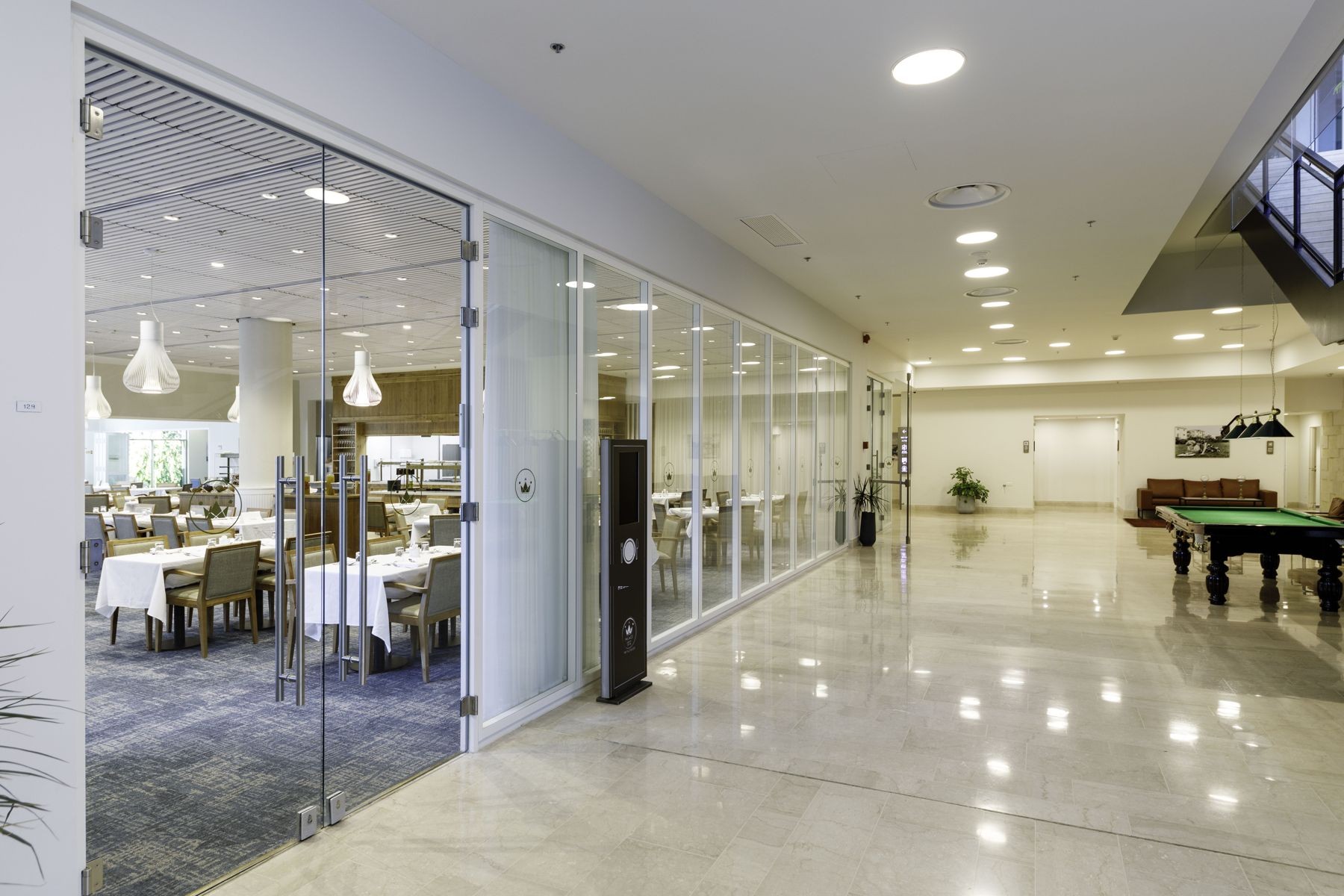 Our project · International
 Our project · International
Printed & Decorative Glass: FAQ
Will the print scratch or fade?
Ceramic prints are fused into the glass surface in the tempering furnace and laminated prints are sealed inside, so they do not peel and are designed for long life.
Can we use our own artwork?
Yes. Send the file and we prepare a print proof and a physical sample for approval.
Can printed glass be used outside?
Yes. Ceramic-printed glass is used on facades and canopies because the print is fused into the glass.
Is printed glass hygienic for restrooms?
Yes. The surface is smooth glass, easy to clean and resistant to chemicals.
Request a Printed & Decorative Glass quote
Send the scope, drawings or a link to the bid set. We review it and reply with questions, a system proposal or a price.
- Free, no-obligation quote or bid
- Value-engineering options included
- Scope review by our technical team
- One point of contact from bid to closeout
Prefer to talk to our estimating team?